Monday, July 3, 2017

An Old Ohio River Barge Boat Cook Brings a Musical Gift of a Lifetime to a Fledging Wheeling Musician named Griffith


She was a feisty old river woman who we called Aunt Ruth even though she was no relation. She spent years as a cook on barge boats that plied the Ohio River from Pittsburgh to ports in Kentucky and Illinois. When she returned from many of her sometimes-week-long river trips, she had the odd habit of bringing us chicken livers. One day, she also brought my brother, Terry, the offer of a special gift, but first, he would have to earn it in her family’s court of music.

Apparently, chicken livers were not so popular among the men who operated Ohio River barge boats. So, as Aunt Ruth prepared chickens to feed the men, she collected the livers in little plastic cottage cheese containers. Somehow, she had the impression that someone in our house would eat them. My Grandma always smiled politely and accepted the container before rushing into the kitchen to temporarily squirrel them away in the refrigerator. On one visit, Aunt Ruth heard Terry strumming away on a little learner guitar.

“Terry, that little tinker toy ain’t nuthin,” she said in a voice that sounded like Marjorie Main, who played Ma in the old Ma and Pa Kettle movies of the 1940s.  “I got a real guitar that’s been in the family a long time. You come up to the house next weekend and maybe we can see if it fits you. Now it ain’t much so don’t get too excited. No one has played it since cousin Jimmy back during the war. But, there’s no sense in it gathering dust if you think you can put it to use. But, we will have to see.”

Not long before this productive little visit from Aunt Ruth, Terry had decided to transition from his first musical instrument – the marimba – to the guitar. The reason for the switch was his growing interest in the folk music phenomena that was sweeping the country and his determination to use his voice as well as his hands to make music. As always, our blind Grandma played a key role in the transition by financing a new very cheap little learner guitar.

It was 1963. I was nine. Terry was 16. We were being raised in Elm Grove by two widows, our Mother, Mabel, and our Grandma, Lizzie. We were one of those many families who didn’t have much disposable income, but, thanks to sound financial management by Mom and Grandma, Terry and I never realized it. Our Great Depression-seasoned elders knew how to pinch a penny as well as how and when to splurge.

We never had a fancy high fi or record player. Instead, we had a U.S. Library of Congress-issued “talking book.” That’s what the government called the compact rugged little mono speaker record player they gave free to blind people so they could subscribe to books and periodicals on vinyl records. Grandma was, frankly, too busy to listen to it. So, she let us keep it in the bedroom we shared on the second floor of our little Columbia Avenue Cape Cod. That’s where I was awakened every morning to the static-infused flat-sounding strumming and harmonies of the Kingston Trio and Peter, Paul, and Mary and fell off to sleep every night to Bob Dylan and Phil Ochs. 

I kind of absorbed the music through various states of sleep. But, Terry was ingesting it with all his attention. He wasn’t just listening, he was figuring out how to play it himself.

He had been pecking away at the beginner’s guitar and was becoming quite proficient, all without lessons. Before long, instead of the Kingston Trio, I was hearing Terry sing “scotch and soda… jigger o gin…oh what a spell you got me in…oh me oh my” as I fell off to sleep clutching my stuffed animal du jour.

The weekend after Aunt Ruth’s most recent chicken liver delivery, we piled in the old Rambler and Mom drove us up Stone Church Road to Aunt Ruth’s house someplace in the country. It was a hot afternoon. When we arrived, a dozen or so of Aunt Ruth’s relatives were relaxing on the grass and in lawn chairs under the shade of big old oak trees. They were laughing, talking and sipping ice teas. 

Not long after we settled in with them, a group of men came out of the small little house nearby carrying guitars, a banjo and a mandolin.

“Did you bring your little tinker toy?” Aunt Ruth asked Terry. “Good. Get it out and sit down there next to my boy Bobby. Just join in.”

This was not, by any means, one of those big bluegrass jam sessions you sometimes see in the movies. There was way more strumming than picking and the music they played were plain old country standards. Friends and family joined in to sing “Let Me Call You Sweethart,” “You Are my Sunshine,” and “The West Virginia Hills.” Terry, his eyes glued to the left hand of the man named Bobby who played a beat-up old guitar, strummed along and duplicated the simple cords he saw the others play.

After an hour or so, Bobby, who was no boy but rather an old man who must have been his 30s, clapped Terry on the back as a kind of gesture of approval.

“Let’s take a little walk inside,” Bobby said. “It’s Terry right? You done just fine Terry.”

Inside, Terry watched Bobby walk to a door that he assumed was a hall closet. His host opened the door, bent over and disappeared into cavernous blackness. Soon, he heard Bobby muttering to himself and saw books, boxes, old articles of clothing, tennis rackets and dozens of other objects come flying out of darkness.
A full three minutes later, Bobby arose out of the storage nightmare with a smile on his face and a worn old guitar in his hand. He held it out to his young guest.

“Here you go young man,” he said. “Sorry there’s no case.”

Terry took the old instrument and ran his hand over the smooth old mahogany finish swiping away a decade or so of dust in the process. It was a 1937 Martin R-18 archtop. It had steel strings and two big “F” holes like those found on violins instead of the more common one big round sound hole. Its neck was discolored from frequent use and the wood between the frets was burrowed and uneven from years of work.

There was no backstory provided about the guitar or how it found its way into the storage closet. All we knew was that it belonged to some guy in Aunt Ruth’s family who played it during World War II and apparently abandoned it with her.

It had a great deal of character and, after a long tuning and adjusting period, it produced a mellow sound that was as smooth as honey. Terry was in love at first sight.

The old Martin became his constant companion. It went to school, to friends’ houses, on our family trips to Buckhannon and Romney—anywhere where Terry could play it. He learned more and more songs, like “If I Had a Hammer,” “Blowin in the Wind,” “Tom Dooley,” and “Where Have all the Flowers Gone.” He honed his vocal skills with voice lessons and gained polish and experience by performing complex solos in the church choir. 

By 1964, he formed his own little folk group called the Columbia Singers with fellow Triadelphia High Schoolers Tam Mallory and Bill Lang. Lang and Mallory were a year older and when they graduated, Jan Worthington and Eric Ackerman stepped in. The tough little Martin played on.

His senior year at Triadelphia in June 1965, Terry agreed to provide guitar accompaniment to a girl who sang “Michael Rowed the Boat Ashore” for the senior talent show in addition to performing with his trio. The show was a big success. Even I was impressed as I sat on those hard-wooden fold-up auditorium seats where someday I would suffer through biology lectures and pep rallies during my own high school career. Everyone was invited back to our house for snacks and a post-show mixer.

Terry was late arriving. He had a separate ride and we were already home in the little house’s living room with several of his classmates awaiting his arrival. The doors and windows were open to fight off the early summer heat. We heard a car pull up, a car door slam, and then a horrible crushing splintering sound before a period of silence.

When Terry opened the squeaky wooden screen door and walked inside muttering obscenities for the very first time in front of our Mom, he sadly held out the old Martin. Its sides were shattered into dozens of pieces. There was an audible gasp in the room. Terry, explained that in his haste to join the party, he forgot all about the tree stump in front of the next-door neighbor’s house where his ride had let him out of the vehicle. He tripped, fell on the guitar hitting the sidewalk, and smashed it.

The party never really got going after that. The people dispersed early, Mom and Grandma cleaned up, and I went off to bed. As I lay in my hot dark bedroom I could hear my brother through the open window as he sat on our rusty yellow metal glider in the darkened back yard under a stinky chestnut tree. He picked and strummed a slow mournful song on the old wounded Martin that I couldn’t quite make out. It’s honey smooth sound was now a rattling tinny noise. Mom said later it was like Terry was having a funeral for an old friend.

We kept the Martin in the basement for a couple of years where it gathered dust. Eventually, Terry found a man in Elm Terrace who could restore it. He had it in his workshop for many months. When it came back, it was whole, but there were mismatched pieces of wood in it that replaced parts that were lost in the accident. The Martin just never played or sounded good again. Eventually, Terry put it in a cheap case and stored it away.

The night before he left for the Army in 1971, Terry gave me the Martin in the hopes that I might learn to play on it, but mostly as a keepsake amid the uncertainty of the times. I never learned how to play guitar, but I kept the Martin for the next 35 years before giving it to a friend who collected and displayed old instruments. It seemed a worthier fate for an old friend than banishment to basement storage rooms.

The old Martin was just old wood and strings, but it brought much pleasure and left its mark on the people who played it and the people who heard it sing.

Fifty-two years later, Terry plays on at renaissance festivals as "The Irish Troubadour" and in restaurants, bars pubs, and other venues throughout the Pittsburgh area, showing the skills honed on the humble old Martin and preserving songs of the past and interpreting the tunes of today.


Monday, May 29, 2017

Grandma’s   Rocker: A Baby

Boomer’s Downsizing Dilemma

They are taking away my grandma’s rocking chair tomorrow and it feels like an old friend I’ve known all my life is going away to live with strangers.

The decision to give it up was a tormenting struggle involving memories, guilt, sentiment and, finally, the reality of the need to move on.

It’s just a piece of old wood held together with ancient glue and a few screws added here and there over the decades to reinforce weakened spots.

It always speaks when people settle into the well-worn seat with a series of loud creaks and cracks but settles down into a predictable and pleasant squeak when the user adopts the proper rocking motion to engage the nicked-up old rocker rails for their intended purpose.

The once-smooth old brown arms look and feel like the deeply veined hands of an old woman with grooves, indentations and pock marks left behind by more than a century of rubbing, tapping, and scratching by friends and ancestors of all ages who took comfort in the big old rocker’s character and functionality and rested their arms on its arms.

There’s a raised carved flower-like decoration on the top two corners of the rocker where users’ heads always rested. The one on the left a bit more discolored than the one on the right indicating that the chair’s most frequent user probably sat at a jaunty angle while rocking babies, knitting socks, or listening to 1930s-radio programs.

There are spindles on either side that provide additional support for the rocker’s old arms and a row supporting the chair’s back. They are all intricately carved long shafts of wood with grooves and flairs and bulbs of accents, except for one that indicates its replacement role with a non-decorative non-matching appearance. I always wondered what happened to the original it replaced. Was it kicked away by a rambunctious toddler being held and rocked by a parent or grandparent in a desperate struggle to induce sleep? Was it snapped off in one of the two-dozen moves the chair endured over its lifetime?  It is mystery never to be solved.

The chair has a colorful origin story. My grandmother, Lizzie Minns, was a little girl in rural West Virginia in the closing decades of the 19th Century. She lost her sight in a battle with typhoid fever as an infant, but was an active child who learned early to expertly sew, knit, and bake. Her skills and optimistic disposition led to her becoming the favorite of many in her family. 

One of her uncles was the pastor of a local church. When he was reassigned to another church in another state, the congregation of his church gave the fancy brand-new rocker to him as a going away present. In turn, he gave the chair to his favorite niece, Lizzie, in tribute to her and because he didn’t have room in his new home for it.

The chair was a staple of my family ever since. My grandfather, Tom Minns, who was also blind, adopted it as his own once he married Lizzie. They moved it from one little apartment to another and it often became a fixture in the little grocery store/confectionaries he operated during the early decades of the 20th Century.

A whole lot of rocking went on in that chair. My Grandfather Tom, rocked my mother, Mabel, to sleep in it. Years later, he rocked my brother, Terry, in it. Grandma Lizzie, rocked me in it. My Mother rocked my brother’s son and then my son in it. She even had the chance to rock her great-grand daughter in it once or twice.

In my childhood, the rocker had an honored spot in the dining room of our house where my grandma would sit in it by the hour as she read her Braille books, repaired our clothing with needle and thread, or crocheted delicate lace items. Her little wooden sewing cabinet sat nearby.

As a child, I often jumped into the chair when it became available and engaged my imagination to picture myself riding a horse like a cowboy as I rocked a little too hard and fast for Grandma’s taste. She couldn’t see me, of course, but she could certainly hear the accelerated rate at which our poor dining room floorboards rattled, accompanied by the rocker’s own protesting creaks under the strain of my full tilt gallop.

Long after my Grandma died, and knowing of my fondness for the old chair, my Mother made me very happy when she gave it to me one spring evening and for nearly a decade, it enjoyed a useful life in the living room of our home, providing extra seating during family gatherings, a place to sit whenever I searched for a book on a nearby set of shelves. We even rocked our own grandchildren a time or two while in its big friendly embrace.

But, eventually, we moved to a brand-new house in another city and the old rocker never did quite fit in its new surroundings where the decorative tone was “beachy” and all the furniture was carefully and successfully selected for form, function, comfort and placement.

After more than 130 years of being a part of my family, the rocker’s function and place devolved into a spot in our bedroom where we deposit all those decorative daytime pillows from our bed that we don’t use while sleeping, or a convenient place to park an article of clothing that we fully intend to hang up tomorrow. I can’t recall the last time I sat down in its old worn seat and just enjoyed it for its powers of comfort and tradition.

I resisted the first suggestion that we seek a new home for the old rocker. My Mother’s passing was too fresh and the memories too vivid. I was torn between two competing realities. On one hand, I had a great appreciation for a family heirloom, tradition, and memories. On the other hand, practicality dictated divesting myself of the old and the unused. Eventually, I realized that the rocker deserved to be more than an obstacle to be vacuumed around every week and with retirement on the horizon, downsizing is just around the corner.

To keep it in the family but out of my house, I reached out to my brother to see if he would be interested in being the keeper of this little piece of history and tradition. He didn’t have room. I called my apartment-dwelling son to see if he would take it in. He too was space restricted. I was partly relieved and partly frustrated.

I was determined not to put it in the annual yard sale or donate it to charity. Either of those options would leave me wondering if it would survive or be treated with the respect it deserved.

Finally, a friend touring our home spotted the rocker in front of our bedroom window—a lonely antique sitting unadorned and unused. She admired it and voiced her appreciation for its beauty and age. She demonstrated the kind of regard for history and tradition that would afford the old rocker a good home. After some thought and rationalization, I decided that she could provide the home for grandma’s rocker that I was seeking.

So, she’s coming to take it away tomorrow. I will not be rocking any more babies in it, or throwing anymore jackets over its back, or sitting in it just to gaze out the window, and neither will anybody else in my family. I’m trying hard to picture the beginning of a new life for the old chair—one that will include attention from someone with the appreciation of its character, and the skill to prolong its service with an occasional patch and repair.

Will it serve that new family for another 130 years? Unlikely, but I’m hoping it will be around long enough to make a few more memories for a few more parents, grandparents, and children.
I’m sure I’m not alone among baby boomers torn between respecting material items of the past and the need to finally move on. 

Our children aren’t interested in old things like our parents and grandparents were and like they wanted us to be. That’s okay. Times change. Many of us don’t live in one house for the final 30 years of our lives preserving the old and collecting new to pass on. We retire and we move away to warmer climates leaving the trifles of nostalgia behind. When that downsizing occurs, somebody gets stuck with the chore of letting go. This time, it was me.


Thursday, March 30, 2017

The Beezer Brothers—Pittsburgh’s Twin   Architects—Revisit one of their Legacy Projects and Find a Brewery Instead of a Church


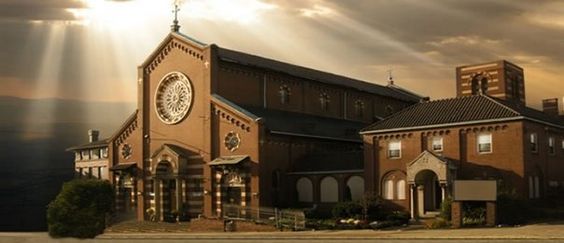
Architects Louis Beezer, and his twin brother Michael died more than eight decades ago, but on a sunny June early morning in 2016, their spirit forms stood side-by-side in silent observation from the old closed balcony of one of the grand structures their firm designed—St. John the Baptist Catholic Church in the Lawrenceville neighborhood of Pittsburgh.

“I still can’t get used to it and I don’t know whether to laugh or cry,” Michael whispered to Louis as they gazed down upon the altered interior of what was one of their crowning Pittsburgh achievements and the early morning light streamed in from the magnificent multi-colored glass of the gigantic round rose window behind them.

“At least it is still standing,” reasoned Louis. “That’s more than we can say about so many of our other buildings.”

“But a brewery and restaurant?” Michael answered. “Nothing was further from my mind when we worked with the Diocese and old Bishop Phelan on this church. Now, they call it the Church Brew Works.”


You shouldn't let it bother you because John Comes did most of the design work anyway," Louis said, recalling the service of another once-famous but now largely forgotten Pittsburgh architect who worked as a designer for the brothers' firm in 1902. "I wonder why we never see him around on our little visits."

"My guess is he didn't ask for that favor," Michael said. 

When the devout Catholic brothers from Altoona, PA were young and deeply immersed in working with Catholic Dioceses in Pennsylvania, Washington State, and California, they had agreed that when they both died, they would ask a favor of the afterlife--to visit some of their favorite buildings once a year on the date the
corner stone for each building was laid. Louis passed in 1929 and Michael followed in 1933. From 1933 onward, their spirits made the rounds. Every year, there were fewer buildings to visit. 


They had a particular affection for St. John. As with most of their projects, the Beezers poured a lot of attention into the new church. Even as their colleague John Comès tackled the basic design work, the Beezer Brothers supervised the building site, and acted as construction managers as they did on most of their major projects.

The cornerstone of St. John the Baptist was laid on a hot June 1, 1902 on Pittsburgh’s Liberty Avenue in Lawrenceville. A good-sized crowd was on hand and it was dotted with lacy white parasols held aloft as barriers to the sun by women wearing white gloves, flowing skirts, and gigantic floral hats. The men wore stiff winged shirt collars, black ties and black suits.

And so, in accordance with their wish, Michael and Louis returned every June 1 to the Northern Italian style architecture of St. John the Baptist Church. They watched quietly from the
The steps leading to the pipe organ balcony
old balcony where the church’s massive pipe organ was played for 90 years’ worth of weddings, funerals, christenings, Christmas Eves, and daily masses.

Much remained of the splendor of the old St. John during their 2016 visit, just as much had changed.

The magnificent stained glass windows depicting religious scenes still glowed with vivid color in the daylight. The names of the Pittsburgh families who donated funds more than 100 years ago to finance the installations still stand out proudly because they were incorporated into the colorful designs.

Heavy, stone columns that featured decorative carved tops still held up detailed brick archways and stood majestically on opposing sides of the great sanctuary. Their scrubbed surfaces seemed brighter than ever to the brothers.

The eight original gold-painted lanterns that hung proudly below the brick arches from great chains continued to illuminate the details of the hand-painted cypress beams on the high vaulted ceiling—just as the architects directed in their drawings more than 100 years ago.

The rows of polished oak pews, however, had been significantly altered. Now, they no longer sat facing forward to accommodate a congregation. They had been cut from their original 24-foot lengths to 54-inch lengths to form mini pews and then arranged to sit on two sides of big wooden tabletops forming rows of restaurant booths.

The planks that were salvaged from shortening of the pews were used to build a long bar on one side of the old sanctuary.

The original Douglas Fir floors, which, for the last 50 years of the building’s life as a church had been covered with plywood, glowed with a reddish orange hue from an extensive restoration.

One of the old confessionals was completely gone and replaced with an entryway into what the brothers came to understand was now a kitchen. A second confessional sat behind the new bar on the left side of the sanctuary and held Church Brew Works merchandise for sale like tee-shirts and baseball hats. That was a change that made both brothers scratch their heads in contemplation when they first saw it in 1996.

Big hulking silver vats now stood along a sidewall behind the bar that presumably held the wide variety of beers. Another set of copper vats, tubes and other brewing mechanisms sat behind a glass wall at the far end of the sanctuary where priests once said mass and delivered homilies, altar boys hustled to do their solemn duties, and countless couples took vows of marriage.

“I have to admit that it has been a spectacular conversion,” Louis confessed to his brother every time they visited since 1996.

“I was somewhat dismayed at first,” Michael admitted. “But this is better than the wrecking ball.”

During their 83 annual visits, the Beezers observed changes to the neighborhood, the city, and to the people as well as to their beloved old church.

During the Great Depression, they witnessed parishioners working together under the guidance of the priests and nuns of St. John collect and then distribute food to needy members of the Lawrenceville community.

In March 1936, the rivers of Pittsburgh overflowed their banks in the largest flood anyone had ever seen, causing widespread damage and homelessness throughout the city and the neighborhood of St. John. The Beezers, during their visit three months after the flood, saw the people of St. John open their church to accommodate flood victims who still had to sleep on the polished oak pews because they had no place else to go.

In the 1940s, they heard the prayers of hundreds of families who sent their young men off to war and watched the church mourn the men who didn’t come home.

And finally, they watched the fortunes and population of the neighborhood decline. It was the late 1950s when the industrial growth that brought steel plants and other manufacturers to the Lawrenceville neighborhood began a reversal of fortune. The mills gradually began to close and jobs began to disappear. Families moved away and the congregation of St. John dwindled.

In the 1970s, the Beezers watched the parish close its school. By 1993, the Diocese of Pittsburgh was forced to reorganize, closing and combining parishes. On their June 1, 1993 visit, the Beezers found their beloved church building deserted with boards over the windows and locks on the doors. That year, they gazed out over the abandoned sanctuary and asked themselves if this visit would be their last.

There wasn’t much for them to see on their visits of 1994 and 1995, but when they returned in 1996, the transformation from church to brew works and restaurant was complete.

The Beezer brothers had left Pittsburgh in 1907, setting up shop in Seattle with a branch office in San Francisco. They thrived as they continued designing homes, banks, and office buildings. But, they never strayed from their main work of designing churches, rectories and convents for their beloved Roman Catholic Church—and they would never stray far from them even in death.

John Comès, the designer who worked for the Beezers in 1902 and played the major role in St. John the Baptist Church, arrived in Pittsburgh in 1896 and remained there as a leading architect with a specialty in church design until his death at 49 in 1922. By then, Comès had become the “go-to” expert on church design and was sought out by bishops across the nation.


The Church Brew Works, named “Best Large Brewpub in America” in 2012 at the Great American Beer Festival, is now in its 21st year. Owned by Sean Casey, the 8,000-square foot former church continues to attract large crowds who take in the sweet smells of wort from brewing vessels mixed with the aromas of an eclectic American Regional cuisine. Names for the hand-crafted beers reflect the heritage of the majestic old structure. They include Celestial Gold, Pipe Organ Pale Ale, and Pious Monk Dunkel, many of which have won national awards.


Saturday, October 8, 2016

Love Him or Hate Him, If not for Christopher Columbus, A lot of Us Wouldn't be Sleeping in on  Oct. 10

Perhaps no holiday has smashed tradition, patriotism, and misconception as controversially up against the facts of science, history, and misconduct as effectively as the reason we stay home on October 10—Columbus Day. No matter how you choose to observe the holiday—as a celebration of a cultural icon and fearless explorer, or as a day of remembrance and reflection over the decades of pain and agony the man eventually caused to be inflicted upon indigenous people—a lot of us get to sleep in.

Christopher Columbus, according to 21st Century historians, falls far short of the accomplishments he has been assigned by legend. The Italian certainly was not the first to advocate that the earth is round rather than flat (the first globe was produced in 1492 before he set sail headed west). 

Many have concluded that he wasn’t even the first European to set foot on North America, instead awarding that distinction to Viking adventurers. But, he was a brilliant navigator with vision, a unique idea to prove, and the determination to convince other people to invest their money in a far-fetched theory—a kind of nautical researcher who was determined, funded after a struggle, and aggressive in proving his idea to be correct, except he was mostly wrong with devastating consequences for millions of innocent people.

He thought he had landed in Asia and searched high and low during four voyages for gold and spices to take home to irritated investors. Explorer Amerigo Vespucci concluded in 1507, a year after Columbus died, that the land old Chris bumped into was a whole new continent and not part of Asia. Columbus’ futile search for gold and spices led to his downfall in the eyes of most who become acquainted with the facts of history.

Desperate to take something of value home to the investors who were becoming anxious to recoup their funding, he began to enslave the indigenous people and haul them back to Europe as servants, and violently squashed anyone who opposed him. He also inadvertently introduced some nasty illnesses into this new territory. Obviously, much death and destruction resulted, which set the tone for incredible cruelty and brutality that lasted for hundreds of years. That’s where the carefully applied Columbus-as-hero varnish that kids once learned about in second grade begins to crumble, crack, and fade.

Columbus Day was celebrated as early as 1866 in New York City, by well-meaning folks who didn’t get the memo on Columbus’ unsavory issues, as a vehicle to celebrate Italian heritage. It first became an official state holiday in Colorado in 1905. In April 1934, after intense lobbying by the Knights of Columbus who also had the best of intentions, FDR and Congress proclaimed October 12 a federal holiday (the government changed it to the second Monday in October beginning in 1970).

Children were taught that Columbus was a virtuous, brave explorer who proved the earth was not flat, and it became a patriotic duty to celebrate his landing in America. But, history has overtaken legend and, although it is sometimes unfair to view historical figures of the past through current day social glasses, more and more people began to believe that Chris would probably not pass a hero litmus test.

So began the backlash. Berkeley, California replaced Columbus Day with “Indigenous People’s Day” observance in 1992. Santa Cruz, California; Dane County, Wisconsin; Minneapolis-Saint Paul, Minnesota; Seattle, Washington; and parts of Oklahoma call the day “Native American Day” instead of Columbus Day. Hawaii, Alaska, Oregon, and South Dakota do not recognize Columbus Day at all. Several other states removed the holiday as a paid day off for government workers. But, if you work for a U.S. federal agency or a bank or one of the other state governments, it is still a paid holiday.


You may celebrate the day as a way to recognize a man with a vision who had the guts and fortitude to prove his theory against social, scientific, and fiscal odds; you may be sickened by the avalanche of misery his actions imposed upon native peoples and consider him a scoundrel of tremendous proportions; you may see the day as way to celebrate Italian heritage as original proponents probably intended; or you may just welcome the chance to ignore your alarm clock and roll over for a couple extra hours of sleep. Whatever you choose to believe, make sure you don’t have to show up for work on Monday, October 10 for goodness sakes—it’s Columbus Day.

Note: I wrote this article for the October 2016 edition of Plugged In -- the employee newsletter of the National Energy Technology Laboratory.

Sunday, September 25, 2016


An Ancient Volcanic Crater Called Molokini


On a crystal clear morning in 1943, a 20-year-old rookie Navy pilot jammed the stick of his Douglas Dauntless dive-bomber forward and sent his aircraft hurtling downward toward a tiny strip of land in the waters off Maui, Hawaii.

The gunner in the back seat held tight to a support bar and prepared to fight G forces. The dive brakes on the aircraft were fully extended and the air streaming around them, mixed with the sound of the screaming engine, made an ominous howl. But there wasn’t anyone on the ground to hear it.

Just hundreds of feet above the earth’s surface, the pilot pulled a lever in his cockpit and sent a 2,250 pound bomb on a course to impact a narrow strip of rocky land sticking out of the Pacific Ocean called Molokini, and then pulled his stick up sharply sending the warplane into a near vertical climb. The bomb hit its target and kicked up rocks, sand and smoke from the ancient strip of land.

It was just one of the thousands of times that U.S. Navy planes 
assaulted the land mass during World War II, not because it harbored enemies or had any strategic wartime significance, but solely because its long skinny shape somewhat resembled the dimensions of a Japanese battleship. It was rehearsal for war and one more assault on ocean ecology and Hawaiian mythological heritage.

In 2016, a tourist with graying hair, bad eyesight, and a fear of the water adjusted his prescription vision facemask, slipped a plastic snorkel mouthpiece in position, and gazed up at the 162 foot peaks of Molokini Crater from the deck of a huge catamaran called the Kai Kanani II. He waited his turn in a line of 35 other tourists before descending a slippery aluminum ladder, snapping rubber swimming fins on his feet, slipping into the cool incredibly clear water, grabbing the edge of a worn flotation device, and flailing about in the water face down to glimpse colorful fish, sea turtles, and, occasionally, his own aquatically-talented grandchildren flutter by gracefully in the depths below.

This is Molokini of the 21st Century—a popular tourist snorkeling destination where only a certain number of boats per day are permitted to motor out and attach to moorings in the heart of waters bordered on one side by a crescent shaped land mass that protects snorkelers and divers from currents and waves. Molokini is a partially submerged crater and is all that remains of one of the seven volcanoes that formed Maui. Experts say it last erupted 230,000 years ago.

Hawaiian mythology, however, has another explanation for Molokini’s formation. The legend goes that Pele, the Hawaiian goddess of fire, and a giant magical lizard that guarded the people of Maui were both in love with the same Hawaiian prince. Pele, in a fit of jealousy, sliced the lizard into pieces and Molokini is all that remains of the creature’s tail, which Pele threw into the sea.

The waters surrounding the crater have long been home to a bounty of sea life. For years, divers have discovered the stone sinkers and fishing lures attributed to early Polynesian settlers. There is also plenty of archeological evidence that ancient visitors also hunted birds, eggs and collected feathers from the rocky crater.

But, that’s not all mid-and late 20th Century visitors found. The U.S. Navy’s wartime target practice left 50 caliber shell casings, unexploded ordinances, and ugly impact indentations all over Molokini and on the sea floor inside the crater.

The Navy’s solution to the danger was to twice take measures to detonate the war remnants, once in 1975 and again in 1984. Obviously, that did nothing good for the fragile coral of Molokini. The elimination of the dangerous wartime litter may have increased the safety of the area, but it kicked up quite a fuss among environmentalists.

Ancient Polynesian fisherman, fire gods, giant lizards, and World War II bombing runs were the last things on our minds when our family waded out to board Kai Kanani II at the beach at Makena on the southern shore of Maui.

An incredibly friendly and professional crew greeted us with a continental breakfast, brief snorkeling safety instructions, and all the equipment we needed. We covered the three miles out to Molokini Crater quickly and hit the water.

“Look up there toward the right when you get in the water,” one of the crew advised as we went down the ladder into the water. “There’s an octopus out there today.”

Probably because we wouldn’t know one from the other, the crew didn’t mention black triggerfish, yellow tang, Moorish idol, parrotfish, peacock grouper, white spotted pufferfish, raccoon butterflyfish and blue fin trevally as fish we could encounter on our visit. All are common to the crater. Some of us did run across a moray eel and a sea turtle or two.

Our grandkids darted around us, intrigued as much by the waterproof GoPro video cameras their parents rented for them on board the Kai Kanani for use in the crater as they were by the fish and coral.

Surprisingly, the crater is Hawaii’s only marine sanctuary where, in addition to octopi and fish, the underwater reserve is home to more than 38 hard coral species.

The designation came somewhat late—after the damage done by the Navy and aquatic thieves, who pilfered black coral from the crater for sale to jewelry makers around the world. Incensed people who valued Molokini’s uniqueness stood up to protest. The concerns eventually led to the designation of the area as a marine underwater reserve.

We were never rushed to get back to the boat during our snorkel adventure. Once we all straggled back, we found that the crew had set out a cold cut buffet and opened the bar.

The snorkelers, now free of their equipment, mingled freely all over the boat.

A seasick woman sprawled out on a bench with an ice bag on her neck.

The crew talked about comic book characters with a guest who wore a Deadpool tee shirt.

Children tested their sea legs by balancing on the netting that hung between the twin hulls of the catamaran’stern

The captain pointed out a nearby sea turtle that broke the surface of the shimmering water for a gulp of air before diving out of sight.

The more adventurous kids took turns diving into the clear blue water and then swimming around to the boat ladder, climbing aboard and repeating the activity over and over again. 

Laughter wafted over the deck when a parent or two got in on the action to attempt a back flip or an uncle made a particularly large splash.


When the day was over, the catamaran made its way swiftly back to Makena. We landlubbers waded ashore and waved farewell to the crew of the Kai Kanani II, savoring our brush with an ancient volcano, its plethora of little-seen sea life, and our short camaraderie with crew and fellow passengers.

Tuesday, September 13, 2016


A Maui ATV Adventure and the Little Magical  People Who May Have Made it Possible


Drawing by 


There is a legend on Maui that centuries before settlers from other Polynesian islands came to Hawaii, magical dwarf-like people called the Menehune lived in the island’s forests and hidden valleys. Gifted craftsmen, they are said to have erected temples, created roadways and houses, and built little fishponds that were isolated and far from the coastlines. 

Some, Menehune like Ea’alulu could turn invisible. Others, like Eleu could move so quickly that he could disappear. Molowa, whose name meant “lazy,” had the power to appear sleeping while his magical invisible self could go off and do good deeds.

We just might have enjoyed a bit of their handiwork when we motored up a rugged mountainside just above Lahaina over rutted, red, dusty pathways in a caravan of noisy indestructible all-terrain vehicles to take a dip in a refreshing little pond 1,800 above the beaches far below. If Ha’alulu, Eleu, and Molowa could see us they would either be happy over the pleasure we took in our journey and their pond, appalled over the noise and dirt we kicked up in the process, or both.

It was a grimy trip from the start. The young tattooed Hawaiian man picked us up in the parking lot of the local Office Max and smiled broadly has he held open the side door of the dirtiest passenger van in America—a well-worn vehicle that would transport our little party, five adults and two kids, up the mountain near Lahaina on Maui for our ATV adventure.

Clouds of red dust billowed up from the old worn seats of the van when we plopped down for the short drive. Reggae music blasted out of the speakers. A wide-mouth plastic container was suspended from the ceiling by a little braided rope with a paper note glued to the front that said, “Tips welcome. Mahalo (Hawaiian word for thanks).” 

A ten-minute, bouncing, jostling, bone-jarring ride later, we emerged from our dirty battered transportation and were greeted by a tall, friendly guide who sat us down under the shade of a rustic shelter, welcomed us to the Kahoma Cattle Ranch, fitted us all for helmets, passed out green bandanas to cover our mouths and noses, and lectured us a bit about safety.

“Keep buckled up. If your vehicle tips over, do not panic,” he said. “Just keep your legs and arms inside the cab and let the roll bars do their job. Everything should be just fine. Oh and keep the bandanas. Don’t try to give them back to me. I don’t want em. That’s disgusting.”

On the ground nearby was a tremendous pile of filthy, abandoned tennis shoes.

“Are those the shoes of riders who didn’t make it?” one tourist in our group cracked as though the joke would be fresh to our host.

The guide patiently explained that those were indeed shoes that belonged to previous riders but they were abandoned because their owners believed that the dust and dirt of the ATV experience had rendered them useless for further wear. That made some of us glance with concern at our own reasonably new Nikes, Adidas, and Asics.

“If anyone wants to borrow a pair for the ride and save your own shoes, have at it,” the guide said. “Word of warning here: you will get dirty.”

The thought of someone else’s’ dirty, dusty, and crusty shoes didn’t seem to appeal to anyone in our group and we all seemed willing to risk our current footwear. Then, the guide escorted us out to a squadron of parked Polaris Rangers—short stubby little vehicles
with tough-looking little tires and sturdy roofs. There were two seats and a little cargo bed in the back of each ATV. We climbed in our assigned carts, two to a vehicle, and got a quick primer on the automatic transmission. Then, we were off in single file up a dirt road that would take us higher up on the mountain.

The Hawaiian Islands are basically just the tops of big volcanic mountains that were formed by eruptions of lava over several million years. The soil is red because of iron and other minerals in the dirt that oxidize or rust over time. Sometimes those hematite soils are used to create dye for fabrics or in spiritual ceremonies in the Hawaiian culture known as ‘ale.

The guide, driving the lead Ranger, enjoyed a red dirt-free trip. The rest of us, following in his wake, were not that lucky. Seven of the stumpy little vehicles kicked up a tremendous amount of red dust and it blew and settled everywhere. If not for our goggles and the bandana that each of us wore over our faces, we would have been blind and unable to breathe.

The dust was so thick that drivers couldn’t’ see the road and had to steer by the taillights or other visible items—like the driver’s shirt—on the vehicle just in front. That made avoiding potholes and ruts impossible. We bounced, slid, and skidded our way up the dusty road and at a good pace. Drivers had to keep up because if we lost sight of the vehicle in front, we would lose the caravan at best, and be unable to see the road at worst. We wound around hairpin uphill curves and scraped against the green tree limbs that lined our wilderness path. We passed through mud puddles, under overhanging vegetation in jungle-like areas, and dipped and dodged all the way up the incline.

The dusty road was interrupted occasionally as we passed over peaceful pastures of an active cattle ranch that remains inaccessible to the general public. Finally, we came to a plateau and rounded the edges of a small body of water—perhaps, but not likely, the work of our little friends, the Menehune. There was a wooden platform in the center of the little lake with a ladder extending into the water. We motored noisily past the lake and continued upward again until the guide brought us to a stop and gave the sign to exit our dusty little vehicles. We had reached the summit of our climb, and a chance to cool down and clean off by way of a long slippery water slide that emptied users in the little lake below that we had passed a few moments before. We were told that the little reservoir was fed by pristine West Maui Mountain waterfalls.

Our hosts offered cold bottles of water from a big blue cooler and sliced up fresh pineapples as a snack. The waterslide experience
bounced riders quickly down a slick white plastic half tube that was kept slippery and fast by trickling water sent down the slide’s long descent into the reservoir. Riding the slides down required a long climb up a wooden set of stairs to regain the summit.

There was a little wooden suspension bridge that carried a trail
down to the lake for those of us who wanted to visit the waters without the quick bouncy descent of the slide. Our altitude gave us breathtaking views of the Pacific Ocean and the town of Lahaina far down below. A peacock wandered the area around the parked Rangers and was perfectly at home with the visitors. 

Occasionally, the bird would stop, cock its head and seemingly stare straight ahead at something we couldn’t detect. Maybe he could see one of the little Menehune!

Eventually, the sliders wearied of their watery adventure. We dried off, helmeted up, covered our mouths and noses with our green bandanas, and fired up our Rangers for the dusty descent to our
starting point. Halfway down the mountain, we came to a stop and our guide walked back through the dusty clouds. Apparently, he had been notified on his radio by his fellow guide, who brought up the rear of our caravan, that one our seven vehicles had flipped when rounding a particularly difficult bend at a speed that wasn’t conducive to keeping all four wheels in contact with the dusty roadway. There were no injuries and the tough little vehicle wasn’t damaged. Another Ranger was dispatched from the base camp not far away to pick up the riders.

Eventually, we all rendezvoused at our starting point where about
14 of us tried very hard to wash away some of the dirt at a tiny little sink and dryed off with one roll of paper towels. It was pretty much a futile effort. Then, it was back to our incredibly filthy van for a ride back to our own vehicles.

Sometimes as I drift off to sleep back home on the mainland, I get this image in my head of three little guys named Ha’alulu, Eleu, and Molowa, standing beside the peacock and pond waving farewell as we slipped back into civilization on our noisy 21st Century transportation that day.


Drawing by H. Kyoht Luterman www.Kyoht.deviantart.com

Mahalo Ha’alulu.

Mahalo Eleu.

Mahalo Molowa.


Sorry about the dust…and the noise.